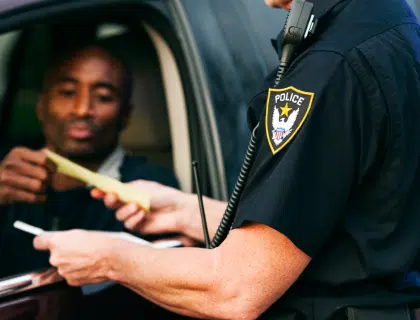
Speeding laws in Victoria are designed to protect all road users and ensure public safety. Even minor breaches of the speed limit are considered offences and can result in fines, demerit points, or licence suspension. The penalties become significantly more severe for excessive speeding or repeated violations.
Understanding your legal obligations — and the options available if you’ve been fined — is crucial to protecting your driving record and your rights.
If you’ve received a speeding fine or face licence suspension, contact experienced traffic lawyers in Melbourne for clear, professional advice. They can assess your situation and help you achieve the best possible outcome.
How Fast Is It Illegal To Drive In Victoria?
If you exceed the speed limit by any amount, you are breaking the law. It is illegal to drive more than 25 km/h over the posted limit or to exceed 130 km/h, whichever is lower.
For speeding offences, you may:
- Receive demerit points
- Have your licence suspended (mandatory for excessive speeding)
- Pay a fine
- Have your vehicle impounded
- In serious cases, receive a criminal record
How To Get Out Of Speeding Fines In Victoria
If you believe there has been an error or that you have a valid reason not to pay your fine, you can apply for a review. This process should begin as soon as possible after receiving the notice.
How To Appeal A Speeding Fine
You can only request one internal review per infringement notice. Note that you cannot request an internal review for speeding tickets issued by speed or red-light cameras.
You may request a review for several reasons:
1. You Were Unaware Of The Fine
If you can show that you did not know about the fine, your application may be accepted. This could happen if:
- The fine was sent to the wrong address
- Your mail was stolen or you were away when the notice arrived
Evidence such as a passport copy showing you were overseas can help support your claim.
However, if you failed to notify VicRoads of your new address within 14 days of moving, your application will likely be rejected.
Once accepted, you will receive an extra 21 days to pay the fine. While you still need to pay, you won’t be charged additional late fees.
2. The Fine Is Invalid
You can request a review if:
- The officer acted unlawfully or unfairly
- The infringement notice does not meet legal requirements
3. The Fine Was Issued To The Wrong Person
If someone impersonated you, used your licence, or shares your name and the fine was issued incorrectly, you can apply for a review with supporting identification or evidence.
4. Exceptional Circumstances
You can apply for a review if extraordinary or unavoidable events occurred, such as:
- A medical emergency
- Family violence affecting your ability to control your driving
- Mental illness, cognitive impairment, or addiction
You must provide supporting documents like hospital records or witness statements.
Going To Court
You can also elect to have your matter heard in court, but you must notify Fines Victoria of your intention.
If accepted, your case will be heard in the Magistrates’ Court (or the Children’s Court if under 18). The magistrate will review the evidence and determine the outcome.
Possible outcomes include:
- Dismissal of the case
- Confirmation or variation of the penalty
- An order for community service
- Recording of a conviction
You can also appeal a speeding fine by nominating another driver if you were not driving at the time or by raising specific defences such as faulty equipment or incorrect signage. However, you cannot contest a fine simply because you didn’t know the speed limit.
When You Can Go To Court
You may apply to have your matter heard in the Magistrates’ Court if your fine is still at the Infringement Notice or Penalty Reminder Notice stage.
If your offence involves speeding, drink-driving, or drug-driving, you must submit a Notice of Objection within 28 days of the infringement date and before your licence is suspended.
Always check the status of your fine — it is displayed at the top of your infringement notice.
How To Challenge A Speeding Fine
If you wish to challenge a speeding fine, you can take the following steps:
Nominate Another Driver
If someone else was driving your vehicle, you can nominate them through the Fines Victoria website. You must do this within the timeframe indicated on your notice.
Provide Evidence
You can challenge the fine by presenting credible evidence such as:
- Proof that the speed detection device was faulty
- Evidence of incorrect or missing road signage
- Documentation showing you were not driving at the time
Consider Specific Defences
Some drivers have argued that vehicle faults contributed to the offence, but these defences are rarely successful. They must be backed by strong mechanical or expert evidence.
Conclusion
Speeding offences in Victoria carry serious legal and financial consequences, ranging from fines and demerit points to licence suspension or even a criminal record in severe cases.
While there are limited circumstances in which a fine can be reviewed or withdrawn, most penalties are enforced strictly under Victorian road laws.
Understanding your rights, the review process, and the available legal options is essential before taking any action. Seeking timely advice from a qualified traffic lawyer can help ensure your case is handled correctly and that any appeal or court process is managed according to Victorian law.